Last updated November 22, 2026
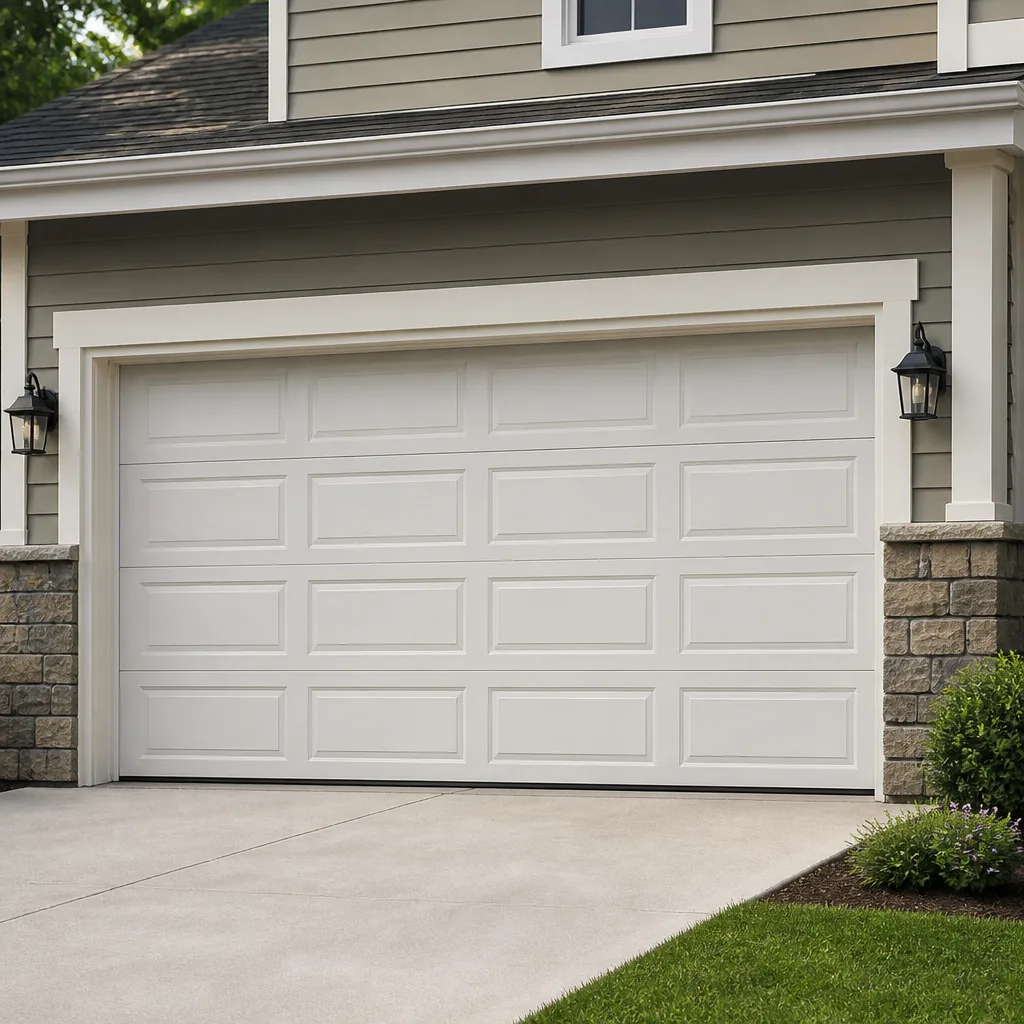 Raised-panel steel
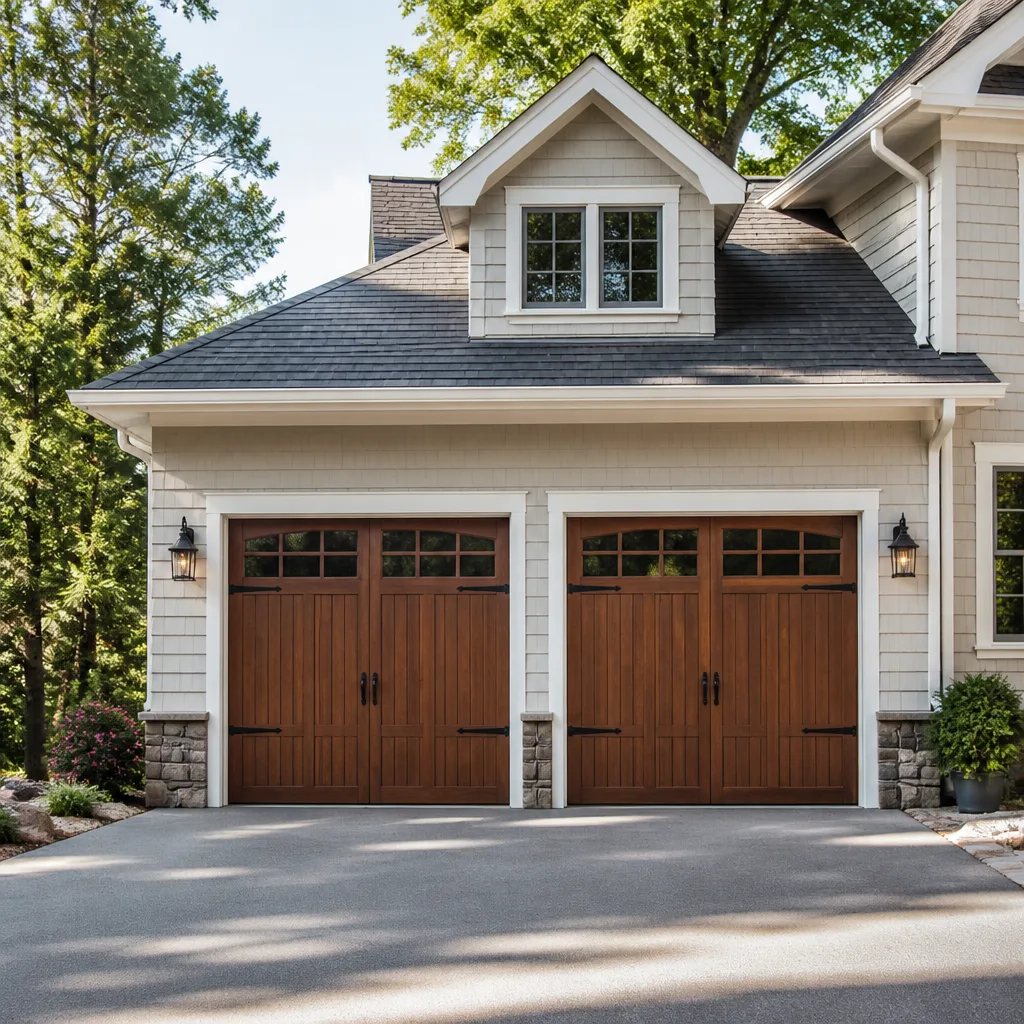 Carriage house
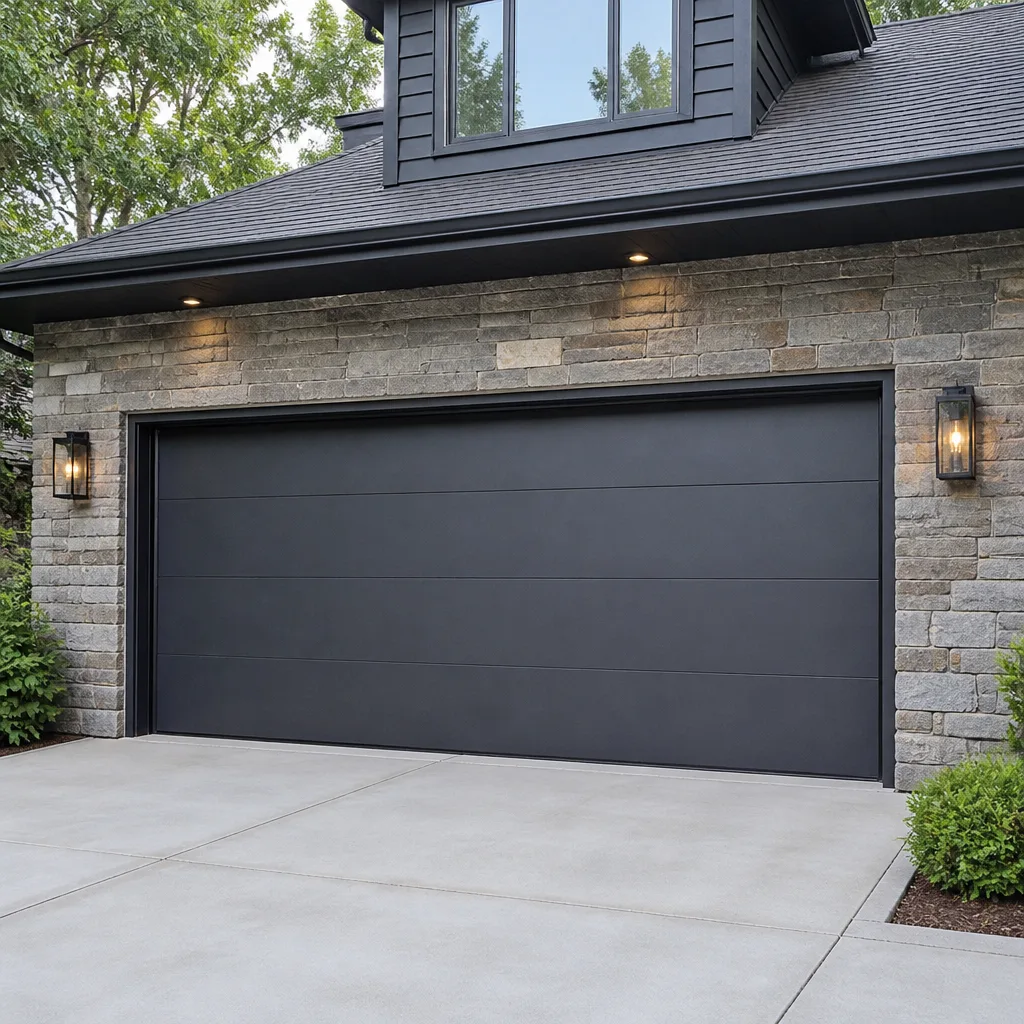 Modern flush
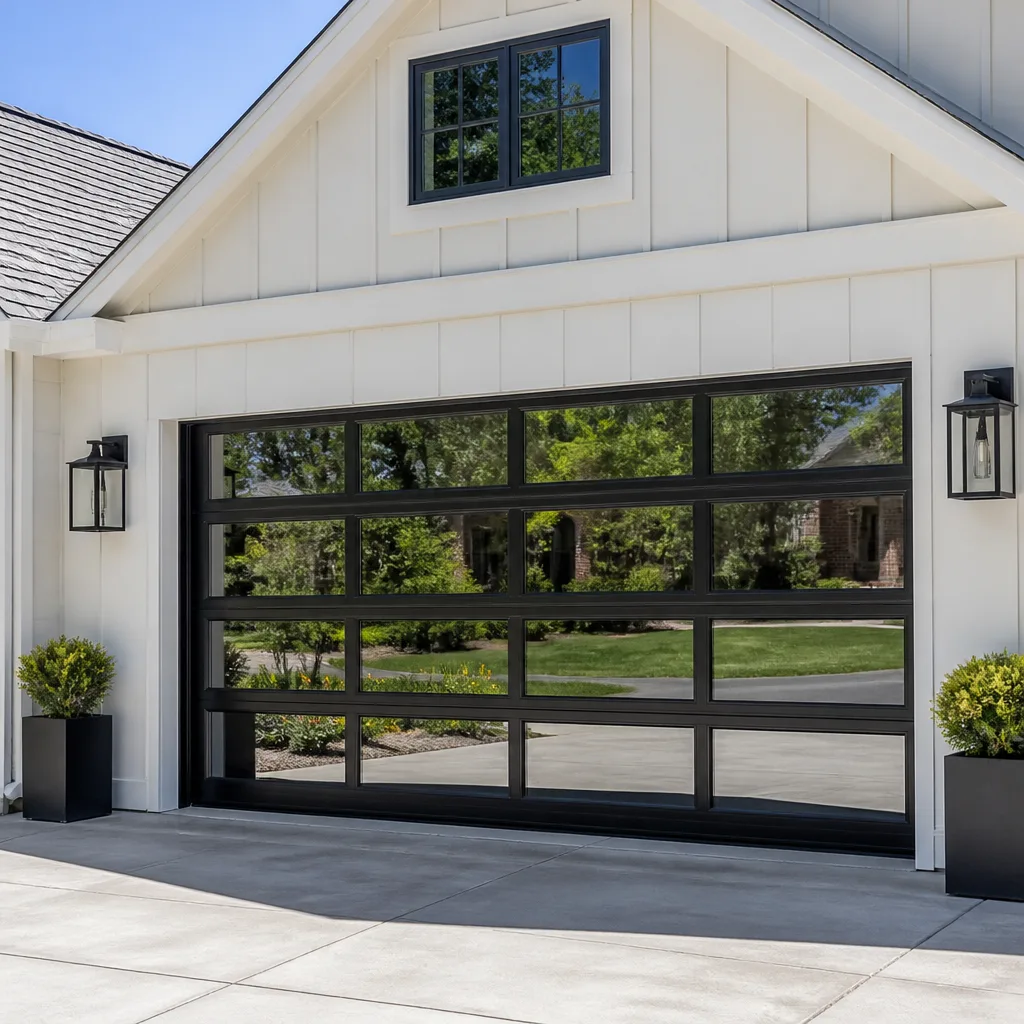 Full-view glass
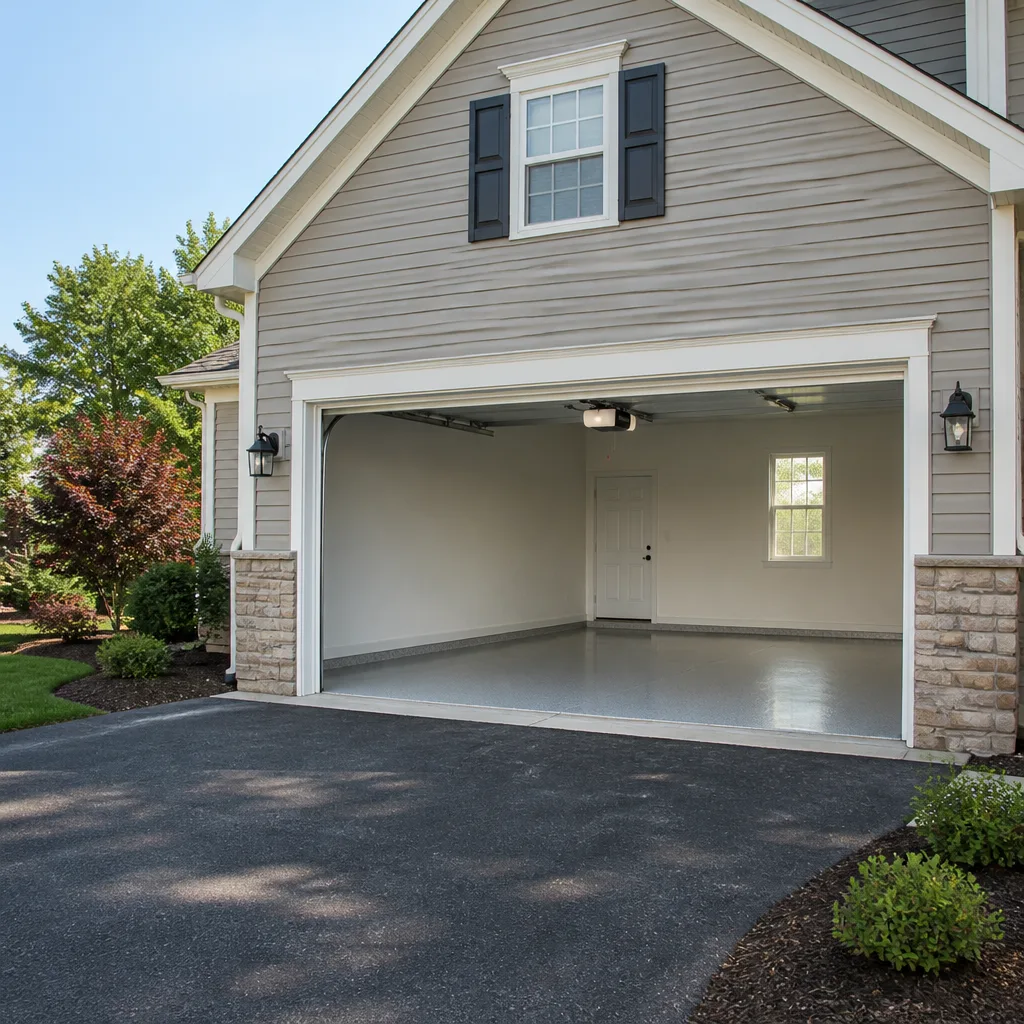 LiftMaster openers
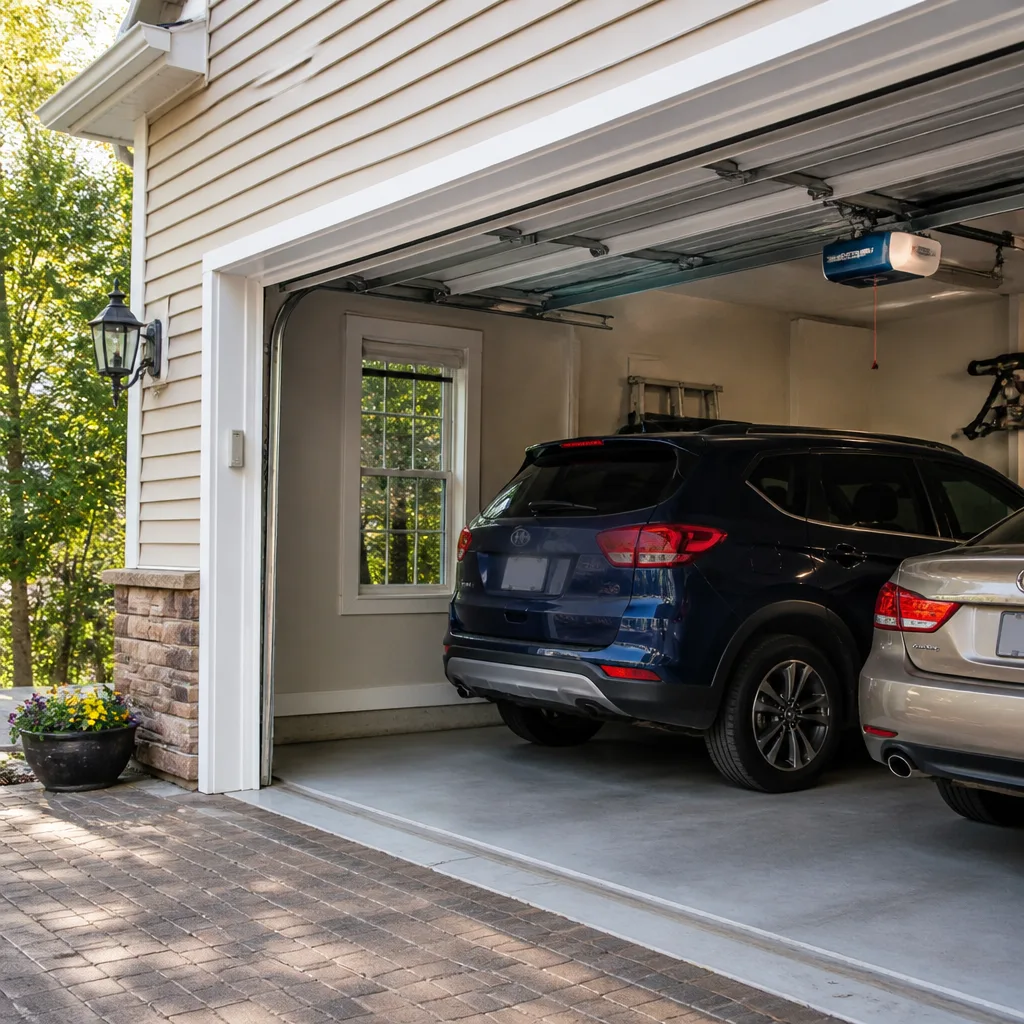 Chamberlain openers
Full 25-point door and opener safety check with every visit - springs, cables, rollers, tracks, and your LiftMaster or Chamberlain opener included
You get a price before we start. It does not change when the pro arrives.
Get your free estimateDIY vs Professional Garage Door: The Euclid Homeowner’s Decision Guide
Most garage door advice splits into two useless camps: “you can fix anything with a YouTube video” and “never touch it, call a pro.” Neither is true. The real dividing line isn’t your skill level. It’s physics. A torsion spring holds enough stored energy to do serious damage in a fraction of a second, and no amount of confidence changes that. But a torn bottom seal or a LiftMaster remote that stopped pairing? That’s a genuine weekend project in Euclid, and we’ll show you exactly where the line falls so you can decide task by task.
Quick Answer
In Euclid, OH, you can safely DIY garage door maintenance tasks like lubricating rollers, replacing weather seals, and reprogramming openers. Anything involving torsion or extension springs, cables, or the door’s balance is professional-only work because the stored energy can injure you instantly. Panel replacement, track alignment, and opener gear failures fall in between and depend on the specifics.
Styles & brands we work with
- Raised-panel steel
- Carriage house
- Modern flush
- Full-view glass
- LiftMaster openers
- Chamberlain openers
Table of Contents
- Why the DIY vs. Pro Debate Isn’t Really About Skill
- The Garage Door Tasks That Are Genuinely Safe for a Confident DIYer
- The Tasks That Are Professional-Only, and the Physics Behind It
- Cost Comparison: Real Savings vs. the Hidden Cost of a Botched Repair
- Where to Buy Garage Door Parts Around Euclid (and What to Skip on Amazon)
- How to Tell If a Previous Repair Was Done Wrong
- Ohio Weather, Lake Effect Snow, and What It Does to Your Door
- Opener Work: When It’s a Programming Fix and When It’s a Repair
- Common Mistakes to Avoid
Why the DIY vs. Pro Debate Isn’t Really About Skill
Garage doors look mechanical and approachable. You can see every part, and nothing is buried inside a wall. That’s exactly why so many Euclid homeowners overestimate what’s safe to tackle. The door doesn’t hide its danger; it hides how much force is stored in it while it sits still.
A torsion spring mounted above the door is under constant tension even when the door is closed and silent. That tension is what counterbalances a door that could weigh several hundred pounds. On a standard residential door, the spring is doing real work every second of its life. Extension springs running along the horizontal tracks carry similar stored energy. When either one lets go unexpectedly, it can whip a cable or throw hardware across the garage. That’s the part that matters for your decision. Skill helps you understand a mechanism. It doesn’t give you a safety margin against stored energy.
There’s a second factor that gets ignored: a garage door operates as one balanced system. Springs, cables, tracks, rollers, hinges, and the opener all depend on each other. Change one without understanding the rest and you can create a new problem somewhere else. A door that worked fine before a DIY adjustment can start jamming or falling too fast days later. In a Euclid home where the garage is the main entrance and the door runs multiple times a day, that imbalance shows up quickly.
So the honest way to decide has nothing to do with whether you’re handy. It’s about which tasks can go wrong in a way that hurts you, and which ones can only go wrong in a way that costs a little money. Once you separate those two categories, the choice gets much simpler.
The Garage Door Tasks That Are Genuinely Safe for a Confident DIYer
Plenty of garage door work is well within reach if you’re comfortable with basic tools. These jobs don’t involve stored spring tension or the door’s balance, so a mistake means a minor cost, not a hospital visit. Here’s what we’d honestly tell a neighbor to go ahead and handle themselves:
- Replacing a bottom weather seal. The rubber seal along the bottom of the door takes a beating in Euclid winters. It slides out of the aluminum retainer or unscrews, and a new one slides back in. A cutting knife and a few minutes do it.
- Lubricating rollers, hinges, and tracks. A little garage-door-specific lubricant on moving metal parts quiets a noisy door and slows wear. Wipe away grit first, then apply sparingly.
- Reprogramming a remote or keypad. If a LiftMaster or Chamberlain remote lost its pairing, the manual walks you through the “learn” button process. This is the single most common “my door stopped working” issue, and it’s almost always a pairing problem, not a hardware failure.
- Replacing the opener’s light bulbs or battery backup. Simple and safe if you follow the opener’s own instructions.
- Cleaning the safety sensors. A cobweb or a knocked sensor lens can stop the door mid-close. Wiping the lenses and checking alignment fixes a surprising share of “broken” doors before any tool comes out.
- Tightening loose hinges. If a hinge loosened up and the door rattles, snugging the bolts with a wrench is fine.
- Replacing a decorative handle or hinge that doesn’t carry load. Cosmetic hardware swapping is low-risk.
The theme is that none of these touch tension or balance. They’re maintenance and parts swaps. If you’re comfortable on a step stool with a screwdriver, you can save the cost of a service call on all of them.
The Tasks That Are Professional-Only, and the Physics Behind It
This is the line. Spring and cable work is professional-only, every time, regardless of experience. The reason is simple: a torsion spring stores energy in proportion to the tension it needs to balance your door, and releasing that energy improperly is instantaneous and unpredictable. There’s no slow “uh oh” moment you can back away from. It happens in less than a second.
Here’s why the physics make it a hard boundary rather than a gray area:
- The spring is under full load even at rest. A closed door looks safe because nothing is moving. The spring above it is wound tight and waiting.
- The stored force scales with door weight. Heavier doors, insulated doors, double-car doors with Clopay or Amarr panels – all of them use stronger springs holding more energy. Bigger door, bigger stored force.
- Winding and unwinding require two winding rods used deliberately. The tool isn’t a socket wrench. A rod that slips or an improper release lets the spring release its tension with no warning, and a flying winding rod is dangerous.
- Cables are under matching tension. The cables that work with the springs are also loaded. A sudden cable failure can whip loose hardware. Extension springs on older doors may not have the containment cables that today’s standards call for.
We handle garage door spring repair as one of our core services precisely because it’s the work most homeowners can’t and shouldn’t do themselves. It’s high-tension work, and it needs the correct spring to match the door’s weight and cycle life. A spring that’s the wrong size or wound incorrectly won’t just fail sooner. It puts the whole door out of balance, and that strains the opener, the cables, and the tracks.
Same category: bending or straightening a badly kinked track, replacing cables, and any repair where the door has jumped its track. Those involve the door’s balance and weight, and a mistake can drop the door. If you suspect a spring or cable is failing, leave the door closed if you can, keep clear of the overhead area, and call for professional help rather than experimenting.
Cost Comparison: Real Savings vs. the Hidden Cost of a Botched Repair
DIY saves real money on the tasks that don’t touch tension. The savings on everything else are mostly imaginary once you factor in the risk. Here’s an honest breakdown of typical Euclid-area ranges so you can see where the money actually goes.
| Task | DIY cost (parts) | Professional estimate | Verdict |
|---|---|---|---|
| Bottom weather seal | Low parts cost | Minor service call | Safe to DIY |
| Remote / keypad reprogramming | $0 | Typically $0 to small call fee | DIY – read the manual first |
| Lubrication / tune-up | Cost of one lubricant can | Modest tune-up rate | DIY is fine |
| Single torsion spring replacement | Not recommended | Typical range for one spring, roughly $150-$300 in this market | Professional only |
| Matched spring pair | Not recommended | About twice a single spring | Professional only |
| Opener gear/circuit repair | Risky if unqualified | Varies by opener and fault | Usually professional |
| Full door installation | Not recommended | Measured and quoted per job | Professional only |
Notice the pattern. The DIY-safe tasks are cheap to do yourself and cheap for a pro too. The tasks where “saving money” sounds attractive are exactly the ones with injury risk. A spring replacement almost always involves a matched pair, so budget roughly double the single-spring figure when both springs are the same age. The written estimate you get before work starts sets the final price, and we quote it before any work begins so there are no surprises.
Compare that to the cost of getting spring work wrong: replacing a damaged door panel, realigning a twisted track, or repairing an opener that burned out fighting an unbalanced door. It adds up fast, and it doesn’t count the risk to you. The honest math favors paying a professional for the dangerous jobs. If you want a straight number, call (833) 726-1387 – estimates are free.
Where to Buy Garage Door Parts Around Euclid (and What to Skip on Amazon)
For DIY-safe parts, you have more options than you might expect. The big national home improvement chains along nearby Euclid Avenue and the surrounding commercial corridors carry weather seals, lubricant, and basic hardware. Local hardware stores in the Euclid area are often more helpful when you need to match a seal profile exactly, because you can bring in a cut piece and compare. That face-to-face matching beats guessing from an online listing.
The places worth being careful are the marketplaces. Not everything sold online is wrong, but the risk profile changes for certain parts:
- Avoid buying torsion springs from a generic online seller. A spring has to be matched to your door’s weight and required cycle life. A listing that doesn’t ask about door weight can’t give you the right spring. This is the component where a wrong part is most likely to be dangerous.
- Skip no-name safety sensors and photo-eye kits. The safety reverse feature is what protects people and pets. Off-brand sensors that fail intermittently are a real hazard.
- Be wary of ultra-cheap replacement rollers and hinges. Cheap metal wears fast and can create noise and drag, which the opener then has to work against.
- Opener parts are fine to source if you know the exact model. Knowing whether you’re dealing with a LiftMaster or a Genie, and the model number inside the battery cover or on the unit, lets you order the correct part. Order the wrong one and you’re guessing at a repair.
For anything touching tension or balance, the part isn’t the point. The installation is. Sourcing a spring online doesn’t change that it still needs correct measuring, winding, and balancing by someone trained to do it safely.
How to Tell If a Previous Repair Was Done Wrong
If you bought a Euclid home with an existing garage door, or you inherited a DIY repair from a previous owner, the door can look fine on the surface and still be out of balance. These are the signs to check before you assume all is well:
- Test the manual balance. Disconnect the opener (pull the release cord) and lift the door halfway. A properly balanced door should stay roughly where you put it. If it drops on its own or needs a lot of effort to lift, someone got the spring tension wrong.
- Look for mismatched springs. Springs replaced at different times can be different sizes. A pair should match in size, wire gauge, and age. A mismatched pair is a common sign of a quick fix.
- Check for missing or loose safety cables. Extension-spring doors should have cables running through the springs to contain them if they break. If they’re missing, that’s a red flag.
- Listen for uneven travel. A door that jerks, binds, or slows at certain points on the way up suggests a track or balance issue that wasn’t fully resolved.
- Inspect the track for dents and bends. Tracks that were hammered back into shape rather than properly adjusted often cause recurring rolling and jamming problems.
- Watch the safety reverse. Place a small object in the door’s path and let it close. If it doesn’t reverse, the safety system isn’t working, which is a serious problem regardless of who caused it.
If you find any of these, it’s worth having the door looked at before you use it heavily. In our experience, correcting a bad repair is usually about restoring balance and safe hardware, not replacing the whole door.
Ohio Weather, Lake Effect Snow, and What It Does to Your Door
Garage doors in this part of Ohio live a tougher life than they do in milder climates. Winter brings repeated freeze-thaw cycles, road salt tracked into the garage, and, in Euclid’s position along the lake plain, lake effect snow and driving cold. Summer swings to hot and humid. That range stresses the parts that flex and the parts that seal.
What that means for your DIY decisions:
- Weather seals wear faster here. A hard winter cracks the bottom seal and lets snow and water in. This is exactly the kind of recurring, low-cost DIY job that pays off in this climate.
- Lubrication matters more. Cold thickens lubricant and dry metal grinds. A regular lubrication routine is genuinely worth doing yourself each season, and it stretches roller and hinge life.
- Springs fatigue over time. All the up-and-down cycles add up, and a tired spring is a when-not-if failure. That’s still professional work, not something to put off once the door starts feeling heavy.
- Salt and grit chew through hardware. Clean the tracks and wipe rollers so road salt doesn’t grind away the metal.
The climate doesn’t change the safety line for spring and cable work. It just makes the DIY-safe maintenance list more important than it would be in a milder place.
Opener Work: When It’s a Programming Fix and When It’s a Repair
Openers are where the DIY question gets fuzzy, because the line between “user error” and “hardware failure” isn’t always obvious. Most of what we get called about isn’t a dead opener at all. It’s a lost remote pairing, a tripped breaker, or a sensor knocked out of alignment. Those are worth checking yourself first.
Numbered through methodically, here’s what a homeowner can safely try before calling:
- Check the power source and the wall control. Confirm the outlet works and the wall control responds. If the opener hums but doesn’t move, that’s a different issue than a dead opener.
- Reprogram the remotes. Follow the manufacturer’s steps for LiftMaster, Chamberlain, Genie, or Craftsman. A re-pairing solves a huge share of “broken remote” problems.
- Realign and clean the safety sensors. Both sensor lights should be solid, not blinking. A dirty or nudged sensor stops the door from closing even though the motor is fine.
- Inspect the manual release. Make sure the release cord hasn’t been pulled and left disconnected.
Where DIY stops is real hardware failure: a stripped gear, a motor that runs but won’t lift, damaged circuit boards, or a drive that fails under load. Those are genuinely worth professional garage door opener repair, because the diagnosis depends on knowing the specific brand and model. Whether it’s a LiftMaster smart opener or an older Craftsman unit, the fix depends on the system in front of you, not a generic procedure.
Common Mistakes to Avoid
- Replacing one spring and leaving the other. Springs fail from the same wear, so a matched pair is usually replaced together. Skipping the second spring means you’ll likely be back at it soon.
- Buying a torsion spring without matching door weight. A spring is sized to your door and cycle life, not to the sticker price. A generic spring is a safety risk and an early failure.
- Bending a bent track back by hand. Tracks take the whole door’s weight. A hammered track rarely runs true and can bind the door and strain the opener.
- Ignoring a door that reverses on its own. A door that opens back up or reverses mid-close often has a sensor or balance problem. Ignoring it means living with a hazard.
- Over-lubricating the tracks. Grease on the tracks attracts grit and makes rollers slip. Lubricate rollers and hinges, and keep the tracks clean and dry.
- Skipping the manual balance check after any repair. A door that isn’t balanced will fight the opener and wear it out. Test it before trusting it.
- Assuming a quiet door is a healthy door. A recent DIY spring job can look and sound fine while being improperly wound. Test the balance and watch the travel.
See the difference
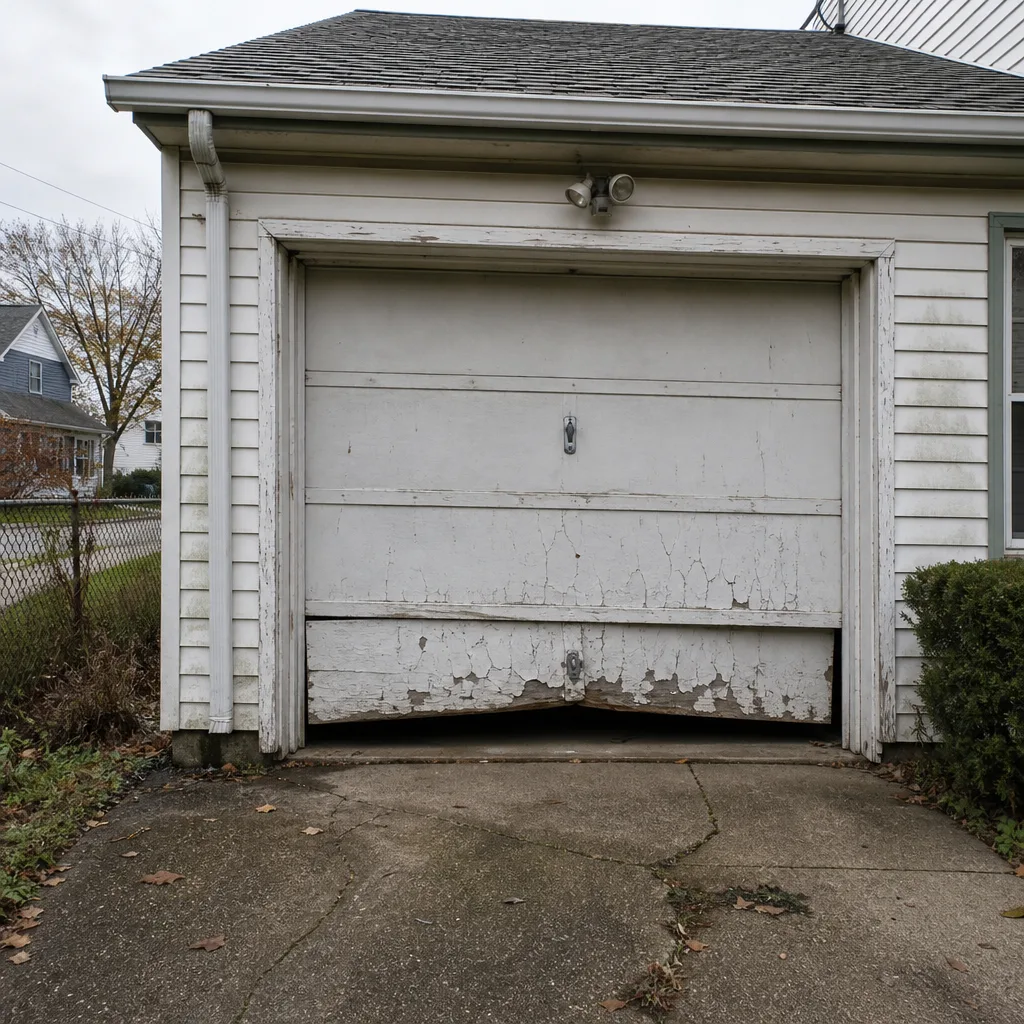 Before
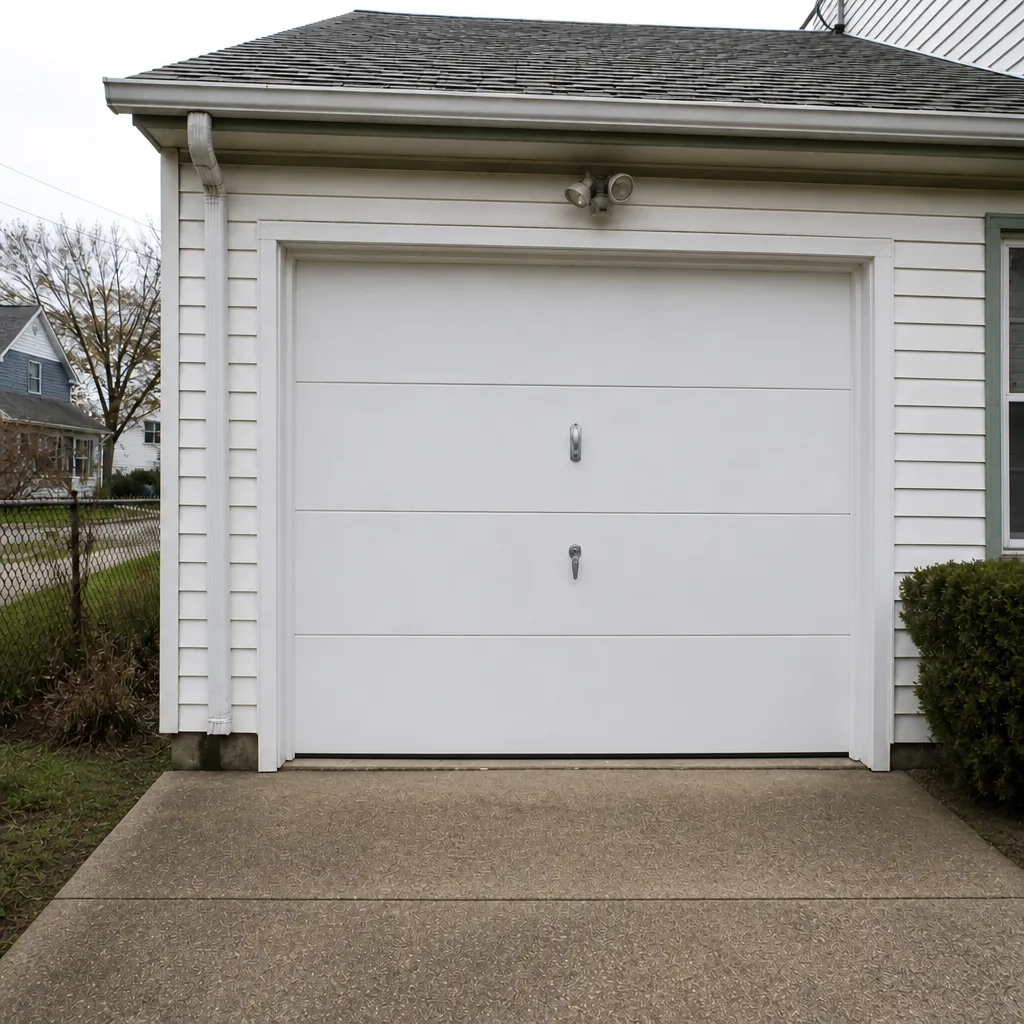 After
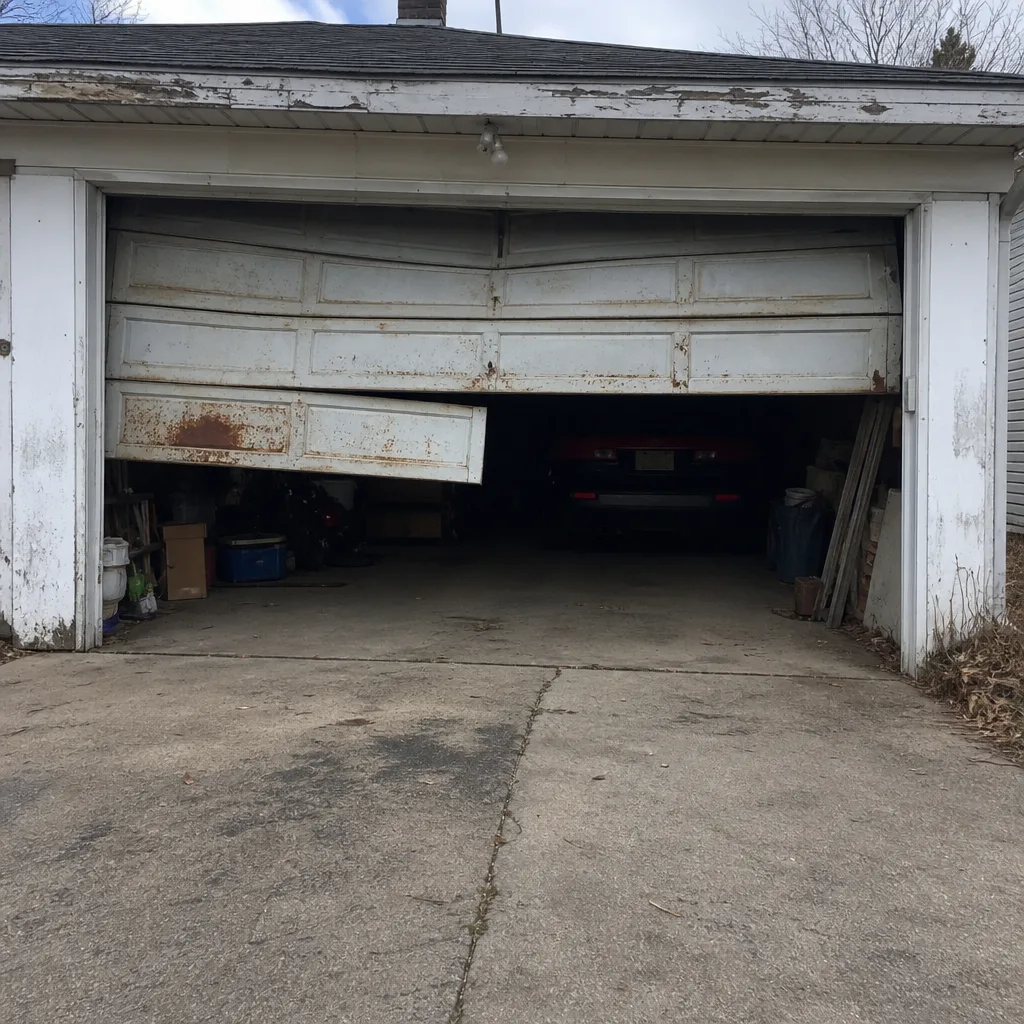 Before
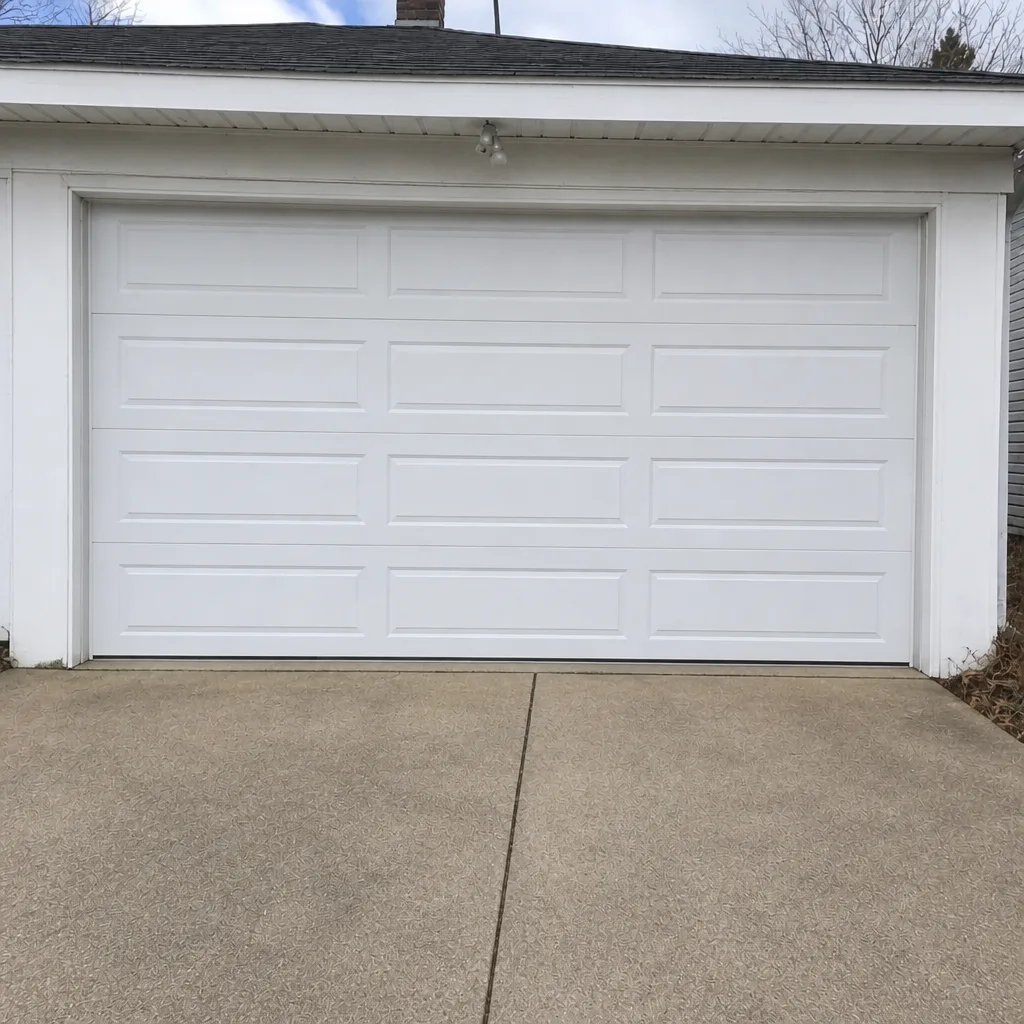 After
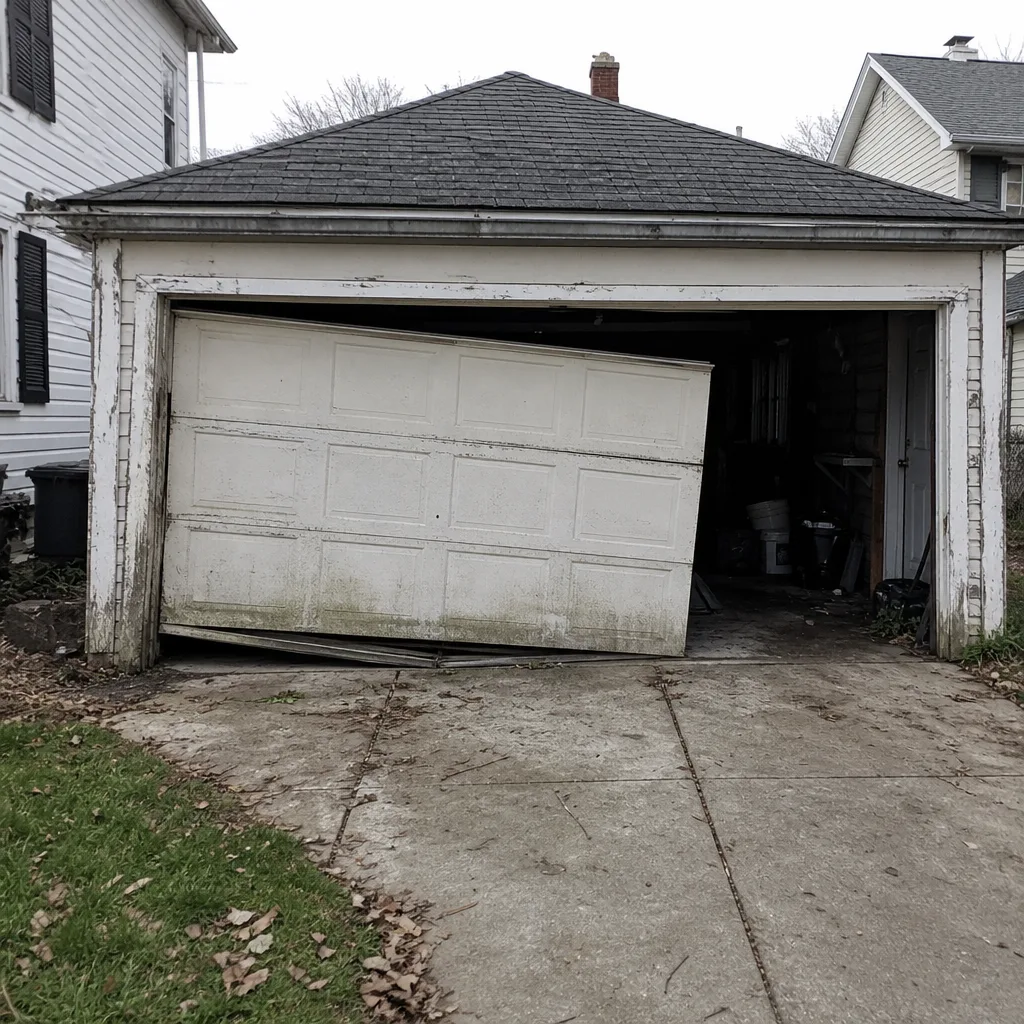 Before
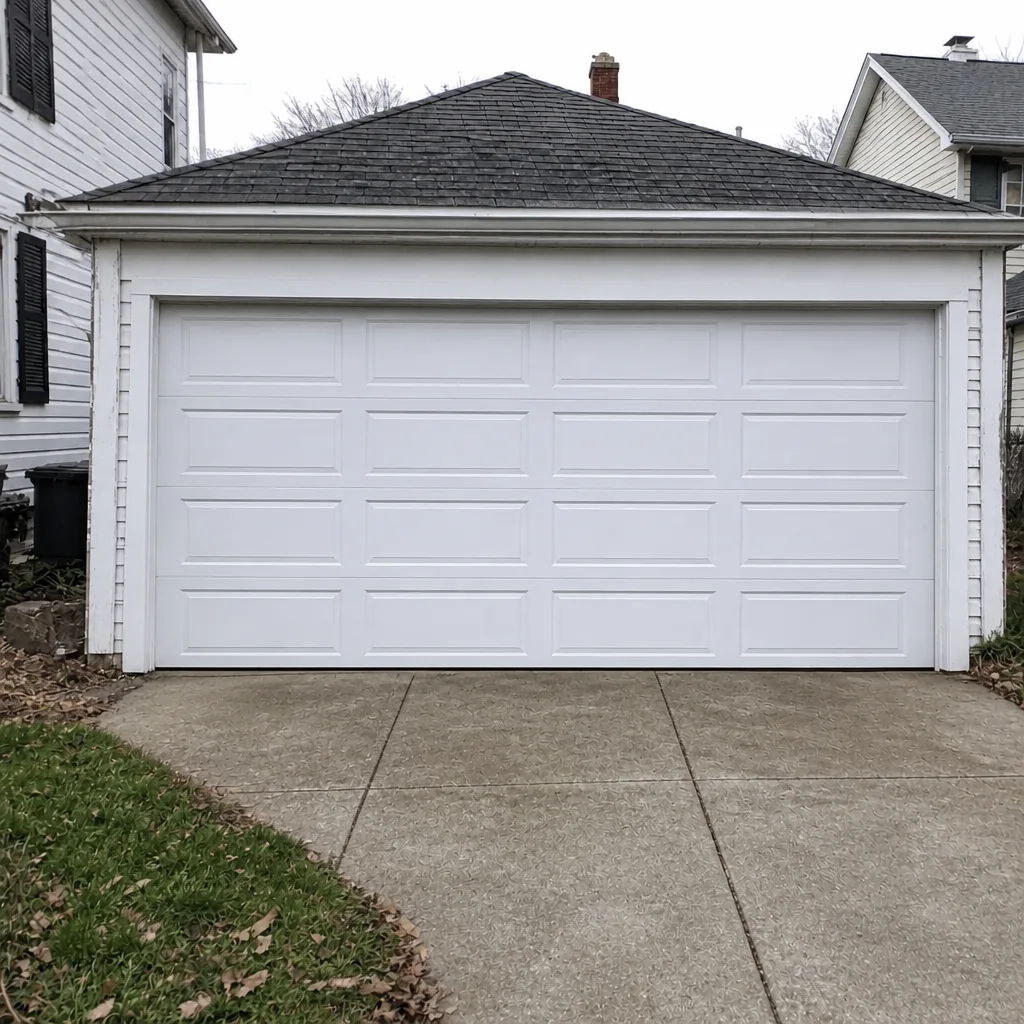 After
When to Call a Professional
Call a professional for any spring or cable problem, any door that has jumped its track or is hanging unevenly, and any repair where the door feels heavy or drops fast. Call for a garage door that won’t open and is trapping a car, or one that’s stuck open and leaving your Euclid home exposed. Opener failures where the motor runs but the door doesn’t lift, or where the brand of the unit matters to the fix, also belong with someone who’s worked on that model. Anything that puts the door’s balance or tension in question is a call, not a project. Garage Door Repair Euclid offers free estimates in Euclid – call (833) 726-1387.
Frequently Asked Questions
No. Torsion and extension springs are under constant high tension, and releasing that tension improperly can cause serious injury in under a second, so spring replacement should always be done by a trained professional. The danger comes from physics, not from your skill level. If a spring is broken, keep the door closed if you can and call (833) 726-1387 for help – estimates are free.
In this market, a single spring repair typically runs roughly $150 to $300, and a matched pair costs about twice that because both are usually replaced together. The written estimate sets the final price, and it’s quoted and agreed before any work starts. Call (833) 726-1387 for an exact quote – estimates are free.
Yes. A bottom weather seal is one of the most worthwhile DIY tasks, especially in this climate, and it needs only a knife and a few minutes because the rubber slides into or screws onto a retainer. There’s no tension or balance involved. If you’d rather have it handled, call (833) 726-1387.
Often, yes. A remote that stopped working is usually a pairing issue or a tripped sensor, not a broken opener, so reprogramming the remote or realigning the safety sensors solves most cases. If the motor runs but the door doesn’t lift, that’s a hardware failure worth professional repair. Call (833) 726-1387 if you’re not sure.
Repeated freeze-thaw cycles, lake effect snow, road salt, and humid summers wear down seals and flex parts faster than milder climates do. Springs also fatigue with every daily cycle, so a door that runs several times a day for years will eventually need attention. The climate doesn’t change the safety line – spring and cable work stays professional-only.
For spring and cable work, yes, hiring a professional is worth it in both safety and long-term cost, because a wrong-sized spring or a bent track leads to bigger repairs down the road. For seals, lubrication, and remote reprogramming, DIY usually saves money. The estimate is quoted and agreed before any work starts, so you know the number up front. Call (833) 726-1387 – estimates are free.
The Bottom Line
The DIY vs. professional call comes down to stored energy. Seals, lubrication, remote pairing, and sensor cleaning are safe for a capable homeowner and worth doing yourself. Springs and cables are professional-only, every time, because the physics can hurt you faster than any level of confidence can help. If you’re not sure a previous repair was done right, a balance test and a careful look will tell you a lot. For the dangerous jobs, or anything that leaves the door out of balance, our technicians have up to 14 years of experience with brands like LiftMaster, Chamberlain, Genie, and Clopay, and we handle the whole job from repair to installation.
For any garage door problem in Euclid, from a snapped spring to a full replacement, garage door repair is what we do, and garage door opener repair covers the smart and legacy units alike. Call (833) 726-1387 for a free estimate.
Written by the team at Garage Door Repair Euclid.